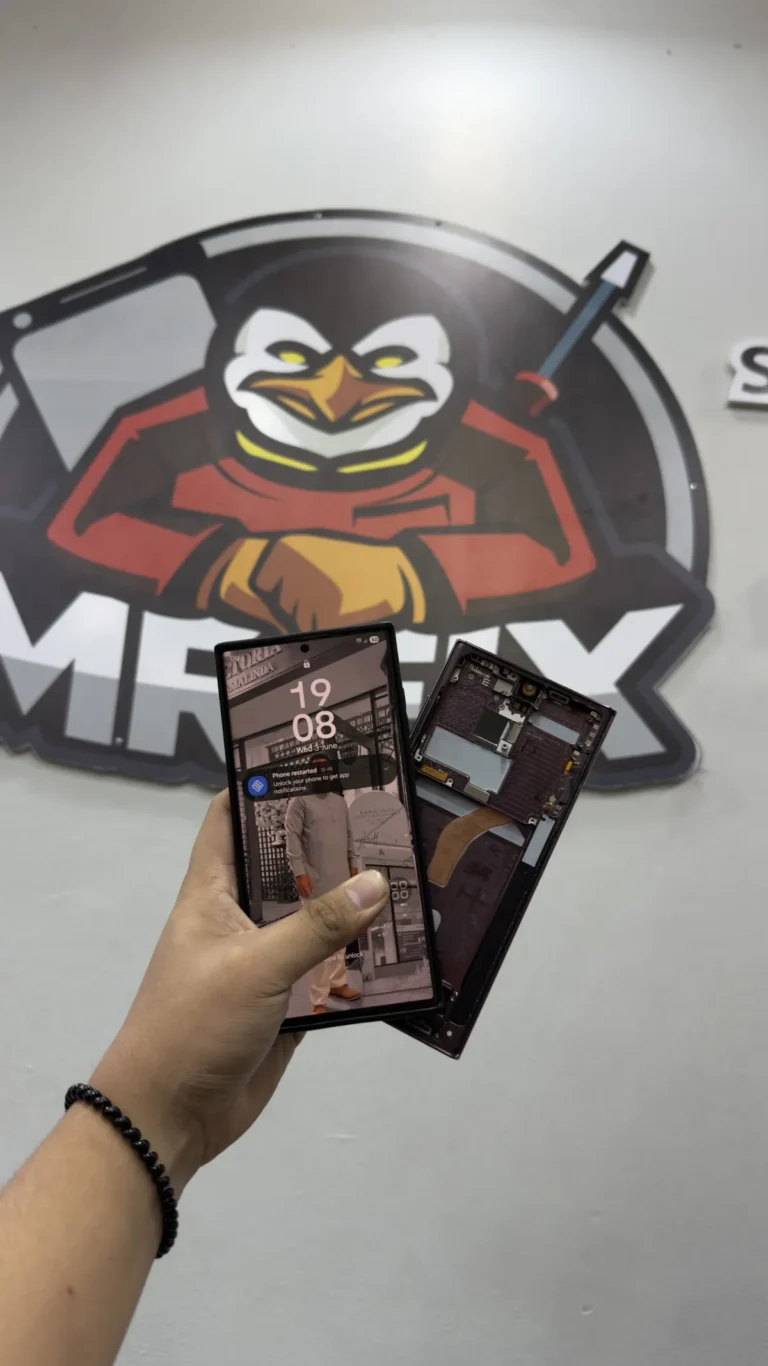

Automatic brightness faults are easier to discuss when the test sequence is simple and repeatable. This repair auto brightness phone Bangi checklist collects useful evidence about light response, display behaviour and device history without erasing the phone.
1. Define the light-response symptom
- The screen stays dim in strong daylight.
- Brightness jumps in a room with steady lighting.
- Manual control works while automatic response does not.
- The display changes only after locking and waking.
- The symptom affects readability or accessibility use.

2. Prepare one controlled comparison
Use a room with stable lighting, note the screen level and then move to a clearly brighter area. Keep the phone uncovered and allow a brief response period. Repeat once only. Record what changed instead of cycling through many settings that make the result difficult to interpret.
3. Check the ordinary accessories
Inspect the case and protector around the upper display. Look for a dark border, dust pocket, shifted adhesive or crack crossing the sensing area. If an accessory can be removed safely, compare the same test without it. Never pry damaged glass or press hard on the display.

4. Add the device history
State whether the fault followed an update, impact, moisture, protector installation or display service. Mention related touch, camera, call-screen or battery behaviour, but do not assume they share one cause. A clear timeline helps preserve both data priorities and diagnostic focus.
5. Explain any accessibility impact
If the display becomes unreadable outdoors, painfully bright at night or difficult for a low-vision user, include that information when arranging the inspection. It describes the practical severity without guessing which part needs attention.

MRFIX Bangi in Seksyen 7 serves Bandar Baru Bangi and nearby Kajang, Putrajaya, Serdang, Nilai and Semenyih. Bring the case and protector normally used so the real sensor conditions can be checked.